Why UNGA 81 Matters for Global Diplomacy
International diplomacy will receive significant attention in September 2026 as representatives from countries around the world gather in New York for the 81st United Nations General Assembly (UNGA 81). The annual gathering comes at a time when governments are dealing with wars, climate-related pressures, technological change, economic uncertainty and disagreements over how the international system should operate.
The 81st session is particularly relevant because its discussions extend beyond individual international crises. They also raise a larger question: how can countries continue to work together when their political interests increasingly differ?
The theme of UNGA 81, “Restoring Trust, Managing Transformation: A United Nations That Delivers for All,” reflects this challenge. The focus is not only on responding to immediate problems but also on improving international cooperation and adapting global institutions to a changing world.
For students and young people interested in international relations, UNGA 81 provides an opportunity to understand how modern diplomacy operates and why decisions made in international forums can eventually affect everyday life.
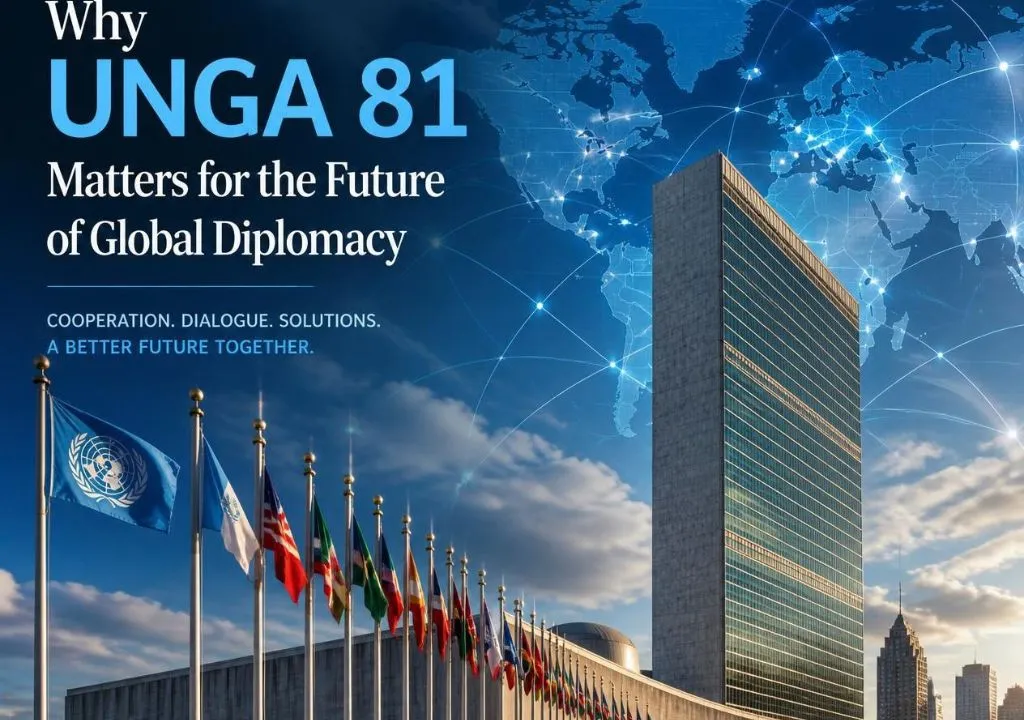
What Is UNGA 81?
The United Nations General Assembly is the main forum where all UN member states participate in discussions on international issues. Unlike smaller diplomatic groups that may involve only selected countries, the General Assembly includes all 193 UN member states, giving governments a common platform for debate.
The annual session is much more than a series of speeches. When world leaders, foreign ministers and diplomats arrive in New York, they also hold bilateral meetings, negotiate with other governments and discuss issues that may not receive the same attention inside the formal Assembly chamber.
This makes the General Assembly an important meeting point for international diplomacy.
A country may have serious disagreements with another government, but international forums can still provide opportunities for communication. Even when an immediate agreement is impossible, maintaining diplomatic channels can be important for managing tensions and identifying areas where cooperation remains possible.
Why UNGA 81 Is Taking Place at a Critical Moment (Why UNGA 81 Matters for Global Diplomacy)
The international environment surrounding UNGA 81 is complicated. Governments are dealing with armed conflicts, humanitarian emergencies, climate risks, economic pressures and rapid technological developments at the same time.
These challenges are also interconnected.
A conflict can disrupt trade and energy markets, while climate-related disasters can put additional pressure on food and water supplies. Technological competition can influence national security, economic development and international relations. Economic difficulties can also make it harder for developing countries to invest in climate adaptation and social development.
This interconnected nature of global problems makes international cooperation increasingly important.
UNGA 81 (Why UNGA 81 Matters for the Future of Global Diplomacy) provides countries with a broad platform to discuss these different challenges together instead of treating each problem as completely separate from the others.
Rebuilding Confidence in International Cooperation (Why UNGA 81 Matters for Global Diplomacy)
One of the central ideas behind UNGA 81 is the importance of trust.
International organisations depend on countries being willing to cooperate, follow agreements and participate in collective decision-making. When governments lose confidence in international institutions, reaching agreements can become more difficult.
The presidency of the 81st General Assembly has identified renewed multilateralism and institutional reform among its priorities. The programme also focuses on peace and security, sustainable development, climate and the environment, human rights, humanitarian issues, technology and artificial intelligence.
These priorities reflect a wider change in the nature of diplomacy.
Diplomacy is no longer concerned only with military alliances, territorial disputes and relations between governments. Modern diplomatic discussions increasingly include climate policy, digital technology, development, health, energy and emerging security risks.
Conflicts Will Shape the Diplomatic Agenda
International security is expected to remain an important part of discussions during UNGA 81 (Why UNGA 81 Matters for Global Diplomacy).
The United Nations provides governments with a formal setting where they can present their positions on conflicts and international security concerns. However, diplomacy does not end when a speech is delivered.
Behind the public meetings, governments also conduct discussions through bilateral meetings and smaller diplomatic engagements. These conversations can be important when countries are attempting to understand each other’s positions or explore possible areas of agreement.
The value of such communication becomes especially visible during periods of tension.
Diplomatic engagement does not guarantee that conflicts will immediately end, but maintaining communication can create channels through which governments can discuss humanitarian concerns, security issues and potential political solutions.
Climate Change Is Now Part of Global Security Discussions
Climate change has increasingly moved from being viewed solely as an environmental concern to becoming an important international policy issue.
Rising temperatures, extreme weather, water stress and environmental damage can affect food production, economic stability and migration patterns. These effects can also create additional challenges for countries that already face political or economic difficulties.
UNGA 81 includes discussions focused on climate action and the transition towards more sustainable development. The session also includes attention to the risks associated with rising sea levels.
These discussions are significant because climate change cannot be managed by one country acting independently.
Countries have different levels of responsibility, resources and vulnerability. Developing countries often argue that they require greater financial and technological support to manage climate-related challenges, while developed economies face pressure to reduce emissions and support international climate efforts.
This makes climate diplomacy an important part of the wider debate about fairness and international cooperation.
Artificial Intelligence Is Entering International Diplomacy
Artificial intelligence is creating another major area of discussion for governments (Why UNGA 81 Matters for Global Diplomacy).
AI is developing rapidly and can influence employment, education, business, defence, public administration and scientific research. At the same time, its development creates questions about privacy, misinformation, cybersecurity, discrimination and responsible use.
The inclusion of AI and digital governance within the priorities of UNGA 81 demonstrates how quickly technology has become part of international diplomacy.
Governments now have to consider questions that did not exist in their current form when many international institutions were established.
For example, countries may need to discuss how AI should be used in military systems, how personal data should be protected and how governments can encourage technological innovation without allowing its misuse.
The international debate around AI therefore has the potential to become an important part of future diplomatic relations.
The Global Development Agenda Still Matters
UNGA 81 is also taking place as countries continue working towards the 2030 Sustainable Development Goals.
The goals cover a wide range of issues, including poverty reduction, education, healthcare, clean water, energy, employment and environmental sustainability.
Progress on these areas is closely connected to international cooperation. Developing countries often require access to finance, technology and international markets to strengthen their economies and improve living conditions.
Development is therefore not separate from diplomacy.
Economic partnerships, development assistance, international trade and access to technology can all influence relationships between countries. Discussions at the UN can provide a forum for governments to raise these concerns and negotiate possible areas of cooperation.
The Question of UN Reform (Why UNGA 81 Matters for Global Diplomacy)
Another important issue surrounding UNGA 81 is whether international institutions are equipped to deal with today’s geopolitical reality.
The United Nations was created in 1945, following the Second World War. Since then, the global balance of power has changed considerably. New economic powers have emerged, technology has transformed communication and international challenges have become increasingly interconnected.
This has led to continuing discussions about reforming global institutions.
Questions about representation are particularly important. Several countries and groups have argued that international decision-making structures should better reflect the contemporary distribution of political and economic influence.
UNGA 81’s emphasis on institutional reform therefore connects to a much larger debate about what the international system should look like in the coming decades.
Why UNGA 81 Matters to Young People
International diplomacy can sometimes appear disconnected from everyday life, particularly when discussions involve government officials and diplomats.
However, decisions made through international cooperation can have consequences for younger generations.
Climate agreements can influence future environmental conditions. AI regulations can affect education and employment. International conflicts can influence energy prices, migration and economic stability. Development policies can shape access to education, healthcare and employment opportunities.
For students studying political science, international relations, public policy or global affairs, UNGA 81 is also a useful real-world example of how international institutions function.
It demonstrates that diplomacy involves more than formal agreements. It includes negotiation, communication, compromise, competing national interests and attempts to create cooperation despite disagreements.
What UNGA 81 Could Mean for Future Diplomacy (Why UNGA 81 Matters for Global Diplomacy)
The importance of UNGA 81 will ultimately depend on what governments do after the discussions take place.
International meetings can establish priorities and create political commitments, but meaningful change generally requires governments to follow those commitments with policies, funding, negotiations and implementation.
The broad agenda of UNGA 81 demonstrates how much the definition of diplomacy has expanded.
Security remains important, but governments must also cooperate on climate change, artificial intelligence, sustainable development, humanitarian protection and global economic challenges.
This means future diplomats will need to understand a much wider range of subjects than traditional foreign policy alone.
The diplomat of the future may need to understand technology, climate science, economics, cybersecurity and development policy alongside international politics.
Can Multilateral Diplomacy Adapt? (Why UNGA 81 Matters for Global Diplomacy)
One of the biggest questions surrounding UNGA 81 is whether multilateral institutions can adapt quickly enough to the changing international environment.
Countries will continue to have different political systems, economic interests and strategic priorities. Complete agreement on major international issues is therefore unlikely.
However, disagreement does not necessarily eliminate the need for diplomacy.
In many situations, the purpose of international institutions is not to make every country think alike. Their purpose is to create mechanisms through which governments can communicate, negotiate and work together where their interests overlap.
UNGA 81 provides one such platform.
Its importance may therefore be measured not only by major agreements but also by whether countries are able to maintain diplomatic engagement during periods of disagreement.
Conclusion (Why UNGA 81 Matters for Global Diplomacy)
The 81st United Nations General Assembly arrives at a significant point in the development of international relations. Countries are facing a combination of traditional geopolitical tensions and newer challenges created by climate change, artificial intelligence, economic transformation and technological competition.
The discussions taking place during UNGA 81 can help illustrate where global diplomacy is heading.
The central challenge is not simply whether governments can reach agreement on individual issues. It is whether international institutions can remain useful in a world where power is changing and global problems are becoming increasingly interconnected.
UNGA 81 therefore matters (Why UNGA 81 Matters for Global Diplomacy) because it brings countries into the same diplomatic space at a time when international cooperation is being tested in multiple ways.
For the future of global diplomacy, the outcome will depend on whether governments can turn dialogue into sustained cooperation and whether international institutions can adapt to the realities of the 21st century.
