International Relations

How Diplomacy Works: A Simple Guide to International Relations

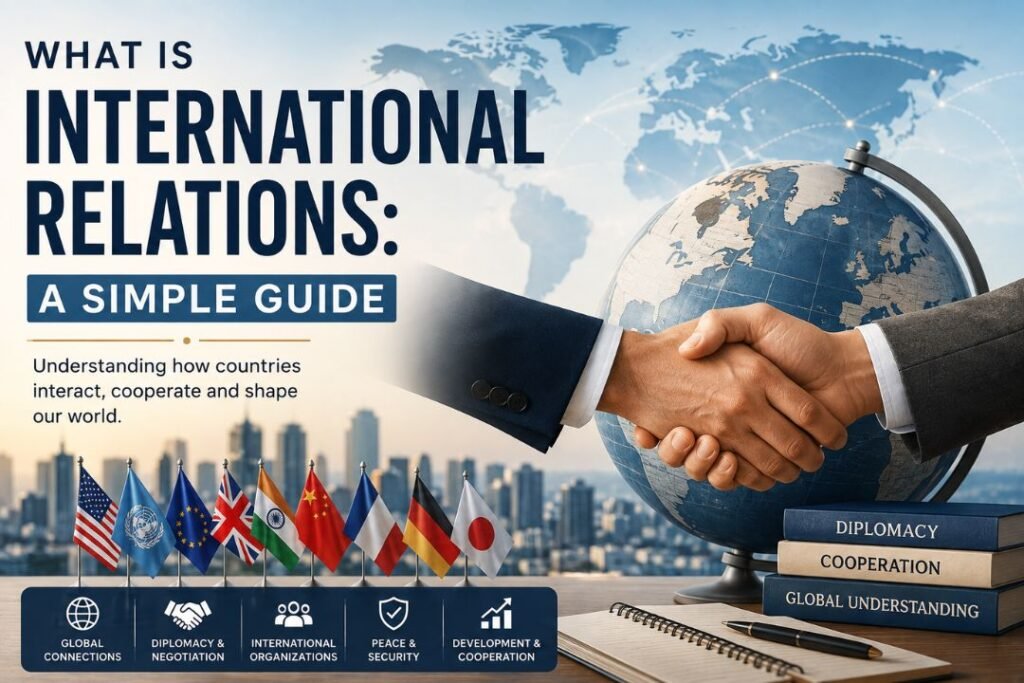
Introduction — What Is Diplomacy and Why Does It Matter? Countries do not always agree with each other. They may have different political goals, economic interests, and security concerns. Still, they need to work together on many issues. Diplomacy helps countries communicate, negotiate, and manage disagreements. It gives governments a way to deal with problems without turning every disagreement into a conflict. Diplomats play a key role in this process. They represent their countries in other nations. They meet foreign officials, share information, discuss problems, and negotiate agreements. Governments also use embassies, foreign ministries, and international organizations to maintain diplomatic relations. So, how does diplomacy work? It starts with communication. Countries share their concerns and explain what they want. They then discuss their differences and look for common ground. In some cases, they reach an agreement. In others, negotiations may continue for months or even years. Diplomacy covers many areas. Countries use it to discuss trade, security, climate change, peace, migration, and international cooperation. In this article, we will explain how diplomacy works, who takes part in it, what types of diplomacy exist, and why diplomacy matters in international relations. What Is Diplomacy? Diplomacy is the way countries communicate and negotiate with each other. It helps them protect their interests, build relationships, and deal with disagreements. Diplomacy can happen in many ways. Government officials may hold meetings with foreign leaders. Diplomats may negotiate an agreement. Countries may also discuss issues through international organizations such as the United Nations. Diplomats often work through embassies and consulates. They communicate with the government of the country where they work. They also report important developments back to their own government. Diplomacy does not mean that countries must agree on everything. In fact, countries often have very different interests. Diplomacy gives them a way to discuss those differences and find possible solutions. For example, two countries may disagree over trade rules. Instead of ending their relationship, they can send officials to negotiate. Each side can explain its position and suggest changes. If both sides accept the final terms, they can sign an agreement. Diplomacy vs. Foreign Policy Diplomacy and foreign policy are closely connected, but they are not the same. Foreign policy sets a country’s goals in its relations with other countries. These goals may include improving trade, protecting national security, building alliances, or increasing international cooperation. Diplomacy helps a country work toward these goals. For example, a country may decide that stronger trade relations with another country are important. This is part of its foreign policy. Its diplomats may then meet officials from that country and negotiate a trade agreement. That is diplomacy. A simple way to remember the difference is: Foreign policy is what a country wants to achieve. Diplomacy is one of the ways it tries to achieve it. How Does Diplomacy Work? Diplomacy follows a process. Countries first identify what they want. They then communicate with other countries and try to find areas where they can work together. The process can take days, months, or even years. It depends on the issue and the relationship between the countries. Here are the main steps that explain how diplomacy works: 1. Countries Identify Their Interests Every country has its own interests. These may include national security, economic growth, trade, energy, or regional stability. Before starting negotiations, a government decides what it wants to achieve. It also decides which issues it can compromise on. For example, a country may want to increase exports to another country. It may also want better access to that country’s market. These goals can shape its diplomatic approach. 2. Governments Start Communicating Once a country knows what it wants, it needs to communicate with the other side. Governments use several channels for this. Diplomats can meet foreign officials. Ambassadors can speak with government representatives. Leaders can also hold direct meetings. Embassies play an important role here. They maintain regular contact between governments and help keep communication open. 3. Diplomats Negotiate Negotiation is one of the most important parts of diplomacy. Each side explains its position. Both sides discuss their concerns and demands. They then look for possible solutions. Neither side always gets everything it wants. Diplomats often make compromises to reach an agreement. Good negotiation requires patience and clear communication. It also requires diplomats to understand what the other side needs. 4. Countries Reach an Agreement If negotiations succeed, countries may reach an agreement. The agreement can take different forms. It could be a treaty, trade agreement, joint statement, or other formal arrangement. Before signing an agreement, both sides usually review its terms. They make sure they understand their responsibilities. An agreement shows that both sides have accepted certain terms. However, the diplomatic process does not end there. 5. Countries Implement the Agreement Countries must follow through after signing an agreement. Governments may need to change policies, introduce new rules, or take other steps to meet their commitments. They also need to communicate if problems arise. Sometimes, countries may disagree about how to apply an agreement. Diplomats can then return to negotiations and try to solve the problem. This shows that diplomacy is not a one-time activity. Countries continue to communicate even after they reach an agreement. Who Are the Main Actors in Diplomacy? Diplomacy involves more than ambassadors. Many people and institutions take part in diplomatic relations. Diplomats and Ambassadors Diplomats represent their countries abroad. They communicate with foreign governments and take part in negotiations. Ambassadors are senior diplomatic representatives. They usually lead their country’s embassy in another country. Diplomats may also monitor political and economic developments. They send information back to their government and help explain their country’s policies. Foreign Ministries A country’s foreign ministry manages many aspects of its international relations. It helps develop foreign policy and guides diplomats working abroad. It also coordinates meetings, negotiations, international agreements, and relations with other governments. Heads of State and Government Presidents, prime ministers, and other national leaders also take part in diplomacy. They may meet foreign leaders