India’s ₹1.10 Lakh Crore Defence Push: How the Defence Acquisition Council Is Reshaping Military Modernisation and Self-Reliance?
India has taken another important step to strengthen its defence capabilities and reduce its dependence on foreign defence suppliers. On September 7, 2026, the Defence Acquisition Council (DAC), chaired by Defence Minister Rajnath Singh, granted Acceptance of Necessity (AoN) for defence acquisition proposals worth approximately ₹1.10 lakh crore.
The approvals cover the requirements of the Indian Army, Indian Navy and Indian Air Force. One of the most important parts of this decision is that approximately 98% of the approved procurements are expected to come from Indian industry. This makes the decision important not only for India’s military preparedness but also for the growth of its domestic defence manufacturing sector.
The decision comes at a time when India’s security environment is becoming more complicated. Modern conflicts are increasingly influenced by technology, electronic warfare, surveillance, mobility and precision systems. Because of this, military modernisation has become an important part of India’s national security strategy.
What Is the Defence Acquisition Council?
The Defence Acquisition Council, commonly called the DAC, is an important decision-making body in India’s defence procurement system. It is chaired by the Defence Minister and plays a major role in examining and approving defence acquisition requirements.
The council studies proposals for military equipment and gives the required approval at different stages of the procurement process. One important stage in this process is the Acceptance of Necessity, or AoN.
AoN should not be understood as a final purchase contract. It is an in-principle administrative approval that allows a procurement proposal to move ahead in the acquisition process. Therefore, the September 7 announcement does not mean that all equipment worth ₹1.10 lakh crore has already been purchased.
This difference is important when discussing India’s latest defence procurement decision because the approval marks the beginning of the procurement process rather than its completion.
What Did the DAC Approve? (India’s ₹1.10 Lakh Crore Defence Push)
The latest DAC meeting considered a wide range of requirements for India’s three armed services. The proposals include equipment that is designed to improve mobility, surveillance, electronic warfare, battlefield engineering, maritime security and operational preparedness.
For the Indian Army, the approved requirements include Chemical, Biological, Radiological and Nuclear reconnaissance vehicles, High Mobility Vehicles, Self-Propelled Mechanical Mine Layers, Advanced Light Helicopters, Trawl Tanks and the Sarvatra Bridge System.
These systems perform different tasks, but they have a common purpose: improving the Army’s ability to operate effectively in difficult and quickly changing battlefield conditions.
For example, CBRN reconnaissance vehicles will help detect, identify, monitor and mark areas that have been contaminated by chemical, biological, radiological or nuclear agents. These capabilities are important because modern militaries must prepare for threats that go beyond traditional battlefield weapons.
High Mobility Vehicles will help with military movement and logistics, especially in difficult terrain. The Army also needs specialised systems to deal with mines and challenging ground conditions. This makes equipment such as mechanical mine layers, trawl tanks and bridge systems strategically important.
Strengthening the Indian Navy
The Indian Navy is also an important part of the latest procurement plans. India’s geographical location makes the maritime domain very important because the country has a long coastline and is located near some of the world’s most important sea routes.
The latest proposals include systems such as medium-range anti-ship missiles, marine gas turbines and other naval capabilities. The purchase of marine gas turbines is especially important because it can support India’s efforts to improve its domestic capabilities in naval propulsion.
A stronger domestic capability in areas such as propulsion can reduce India’s dependence on foreign suppliers for critical components. This is important because military equipment often needs long-term maintenance, spare parts and technical support.
For India, developing domestic capabilities in these areas can therefore improve both military readiness and strategic autonomy.
Modernising the Indian Air Force
The Indian Air Force is another major beneficiary of the latest DAC approvals.
The proposals include Arudhra radar systems and Ground-Based Multi-Purpose Jammers, along with other requirements connected with the modernisation of India’s air and electronic warfare capabilities.
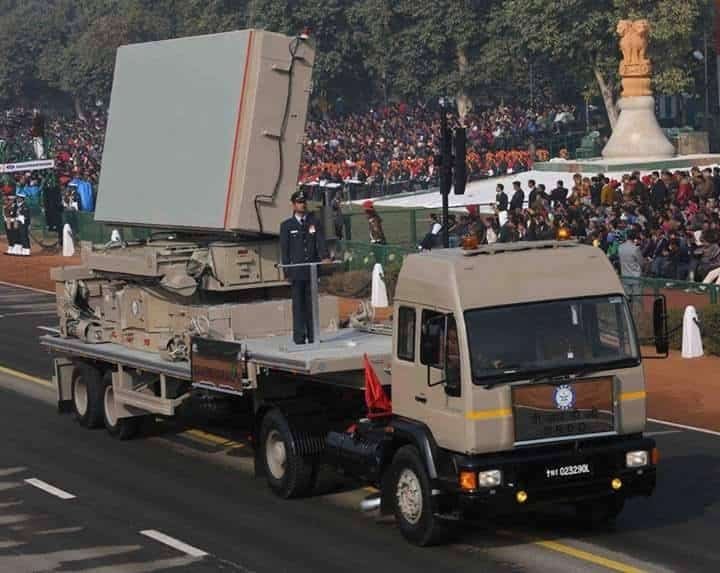
Radar systems play an important role in detecting and monitoring objects in the airspace. In today’s security environment, effective radar coverage is necessary for maintaining awareness of what is happening in the air and for supporting air-defence operations.
Electronic warfare is also becoming more important. Ground-based jammers can interfere with or disrupt an adversary’s radar systems. This can give Indian forces an important advantage during military operations.
The increasing focus on electronic warfare shows that India’s defence modernisation is moving beyond traditional platforms. Modern military strength depends not only on aircraft, ships and ground vehicles but also on sensors, communications, electronic systems and information capabilities.
Why Is 98% Domestic Procurement Important? (India’s ₹1.10 Lakh Crore Defence Push)
One of the most important features of the latest DAC decision is the plan for approximately 98% of the approved procurement to come from Indian industry.
This plan is closely connected with India’s wider Atmanirbhar Bharat and Make in India objectives.
For many years, India has depended heavily on foreign suppliers for several categories of defence equipment. International partnerships continue to be important, but too much dependence on outside suppliers can create problems during geopolitical crises, supply disruptions or changes in international relations.
Domestic manufacturing can help India gain greater control over important defence supply chains.
It can also create opportunities for Indian companies working in aerospace, electronics, engineering, radar technology, propulsion, software and other advanced technology fields.
The growth of the domestic defence industry can also affect sectors outside defence because many defence technologies require highly skilled engineers, researchers, manufacturers and technology companies.
A Push for India’s Defence Industry
India’s ₹1.10 lakh crore defence push could create more opportunities for Indian defence manufacturers.
Large defence programmes can encourage companies to invest in research, production facilities, skilled workers and technology development. They can also promote cooperation between large defence companies and smaller suppliers.
This can help India build a wider defence manufacturing ecosystem instead of depending on only a small number of major manufacturers.
India’s defence industrial corridors in states such as Uttar Pradesh and Tamil Nadu are also part of the country’s larger effort to develop domestic defence production capabilities. These industrial ecosystems are designed to bring manufacturers, suppliers and technology companies together.
However, procurement approvals by themselves do not guarantee successful manufacturing or timely delivery. Indian companies will need to show that they can produce advanced systems on time, maintain quality standards and provide dependable long-term support.
What Does This Mean for India’s National Security?
The latest DAC decision (India’s ₹1.10 Lakh Crore Defence Push) is directly connected with India’s national security.
India faces a complicated security environment that includes land borders, maritime interests, airspace security and rapidly changing technological threats. Because of this, the armed forces need equipment that can work effectively in different environments.
Modernisation can improve operational preparedness by giving the military better mobility, surveillance, electronic warfare and specialised battlefield systems.
At the same time, domestic production can give India greater confidence that critical equipment and components will remain available during periods of international tension.
Defence self-reliance does not mean that India will completely stop working with foreign countries. Instead, it means developing stronger domestic capabilities while continuing international partnerships whenever they provide strategic value.
The Geopolitical Dimension
India’s defence modernisation also has wider geopolitical importance.
The Indo-Pacific region has become increasingly important in global politics, while competition among major powers is affecting security calculations across Asia.
India’s position in the Indian Ocean gives it an important strategic role in maritime security. At the same time, India’s land borders require strong capabilities for operating in difficult geographical conditions.
This means that India’s defence policy cannot be separated from its foreign policy.
A stronger military can give India greater strategic flexibility when it responds to international security challenges. Domestic defence production can also support India’s goal of maintaining strategic autonomy. This allows India to make foreign-policy decisions without becoming excessively dependent on one particular external supplier.
Technology Is Changing Modern Warfare
Another important lesson from the India’s ₹1.10 Lakh crore defence push is that technology is becoming more important in modern warfare.
Military strength today depends on much more than the number of soldiers, aircraft or ships that a country has. Radar systems, electronic warfare, secure communications, surveillance technologies and advanced mobility systems are becoming increasingly necessary.
The inclusion of systems such as radars and ground-based jammers in the latest procurement proposals shows that India is focusing on these emerging requirements.
India will increasingly need to invest in areas such as artificial intelligence, drones, cybersecurity, space-based surveillance, autonomous systems and advanced electronics if it wants to remain competitive in future conflicts.
Challenges Ahead
Despite the large scale of the announcement “India’s ₹1.10 Lakh Crore Defence Push”, several challenges still remain.
The first challenge is implementation. AoN is an important step, but the procurement process must still pass through later stages before final contracts are signed and equipment is delivered.
The second challenge is timely production. Defence projects can involve complicated technologies and long manufacturing timelines. Delays can reduce the operational value of acquisitions that are otherwise important.
The third challenge is technology development. Domestic manufacturing must move beyond simply assembling equipment. It should gradually build deeper capabilities in research, design and advanced engineering.
The fourth challenge is cost and quality control. Large procurement programmes need careful management so that public funds are used efficiently and the armed forces receive systems that are reliable and technologically capable.
Therefore, the real success of the ₹1.10 lakh crore defence push will depend not only on the size of the approvals but also on how effectively the projects are carried out.
What Does the Decision Mean for Atmanirbhar Bharat?
The latest DAC decision “India’s ₹1.10 Lakh Crore Defence Push” is another important step in India’s long-term effort to become more self-reliant in defence production.
The focus on Indian industry can strengthen domestic supply chains, encourage private-sector participation and motivate companies to invest in advanced defence technologies.
It can also support India’s ambition to become not only a major defence consumer but also a defence producer and exporter.
India has already been giving greater attention to defence exports and indigenous military technologies. A stronger domestic industrial base could provide the foundation for expanding this role even further in the future.
Conclusion
The Defence Acquisition Council’s approval of approximately ₹1.10 lakh crore in defence acquisition proposals is an important development in India’s national security and defence policy.
The decision covers the Indian Army, Navy and Air Force. It includes requirements ranging from CBRN reconnaissance vehicles and high-mobility vehicles to helicopters, radar systems, electronic warfare equipment and naval propulsion systems.
The decision (India’s ₹1.10 Lakh Crore Defence Push) is especially significant because approximately 98% of the approved procurement is expected to come from Indian industry. This reflects India’s growing focus on defence self-reliance and domestic manufacturing.
However, the announcement of “India’s ₹1.10 Lakh Crore Defence Push” should be understood correctly. The DAC has granted Acceptance of Necessity, which is an in-principle approval and is not the same as completed procurement.
The next stage will be implementation. India will need to make sure that these systems are developed, manufactured and delivered efficiently while maintaining high standards of technology and quality.
Ultimately, the latest DAC decision is about more than spending money on military equipment. It represents India’s wider effort to modernise its armed forces, strengthen its domestic defence industry and improve its strategic autonomy in an increasingly uncertain geopolitical environment.
For India, the long-term objective is clear: build stronger armed forces while developing the domestic industrial and technological capabilities needed to support national security.
