Introduction: What Is Geopolitics? A Simple Guide to Global Politics
Countries do not live in isolation. They trade with each other. They share borders. They use the same oceans and trade routes. They also compete for land, resources, money, and influence. Geography plays a big role in these relationships.
A country’s location can affect its security. Its access to the sea can affect its trade. Its natural resources can affect its economy. Its neighbors can also affect its foreign policy. This is where geopolitics comes in.
Geopolitics looks at how geography, power, and resources shape relations between countries. It helps us understand why countries make certain decisions. It also helps explain why some places matter more than others in world politics.
For example, a country may control an important sea route. This can make the country important for global trade. Another country may have large oil or gas reserves. This can give it a strong position in the energy market.
But geography is not the only factor. Money, military strength, technology, resources, and alliances also matter. Together, these factors shape a country’s power and influence. Geopolitics affects more than governments. It can affect businesses, workers, travelers, and ordinary people.
A war can increase fuel prices. A trade dispute can affect products. A problem with a shipping route can delay goods. That is why geopolitics matters.
In this guide, we will explain what geopolitics is, why geography matters, what gives countries power, and how geopolitics affects the world.
What Is Geopolitics?
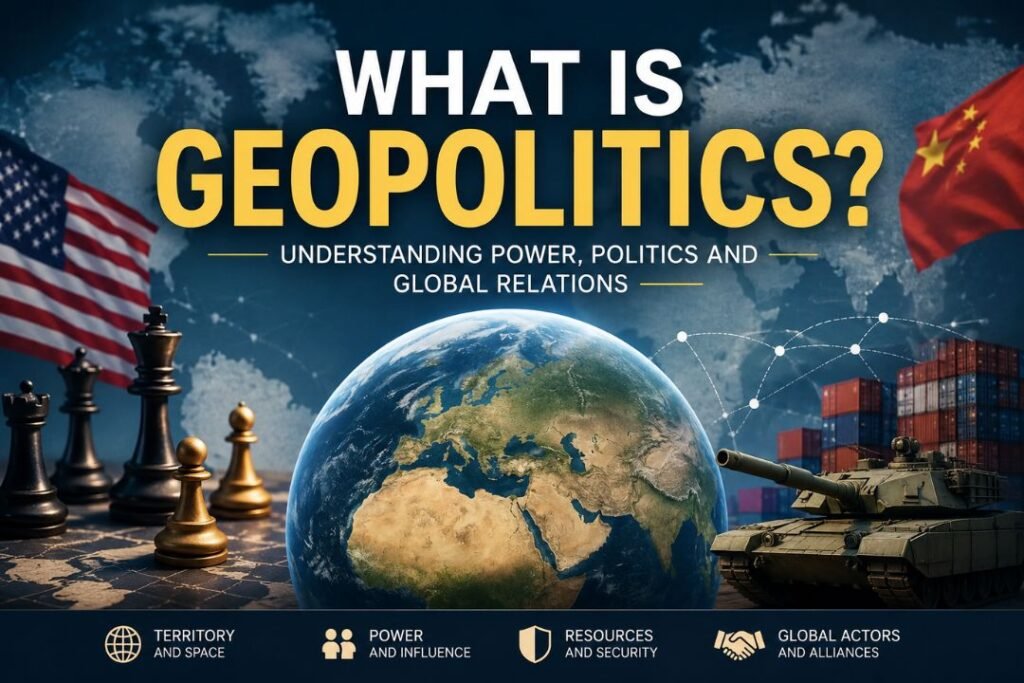
Geopolitics is the study of how geography and power affect world politics. Every country has a different location. Every country also has different resources, borders, economic strength, and security needs. These differences affect how countries act.
For example, imagine a country with access to the sea.
It can use ports to send and receive goods. It can build a navy to protect its ships. It can also become an important part of international trade.
Now imagine a country without access to the sea.
It is called a landlocked country. It needs routes through other countries to reach international markets.
This difference can affect trade and foreign policy.
Resources also matter. Oil and gas can give a country economic importance. Minerals can support industries and technology. Water and food are important for national security. Countries may work together to access these resources. They may also compete over them.
Power is another key part of geopolitics. Military power matters. But it is not the only type of power.
A strong economy can increase a country’s influence. Good technology can give a country an advantage. A large and skilled population can support economic growth. Strong alliances can improve a country’s security.
So, when we study geopolitics, we ask simple questions:
- Where is the country located?
- Who are its neighbors?
- What resources does it have?
- Does it have access to the sea?
- Does it control important trade routes?
- How strong is its economy?
- How strong is its military?
- What technology does it have?
- Who are its allies?
- What threats does it face?
These questions help us understand why countries make certain choices.
Geopolitics Is Not Only About Geography
Geography is important. But it does not tell the whole story. Technology has changed global politics. Countries now compete over artificial intelligence, computer chips, satellites, cybersecurity, and digital systems.
Economic power also matters. A country with a strong economy can invest more in defence, technology, infrastructure, and research. It can also have more influence in global trade.
Alliances matter too. Countries often work together when they share common interests. They may form security partnerships or trade agreements.
So, geopolitics connects many things. It connects geography, power, resources, economics, security, and politics.
In simple words, geopolitics helps us understand how a country’s location and power affect its relationship with the rest of the world.
Why Does Geography Matter in Global Politics?
Geography can create both opportunities and problems for a country. A country’s location can affect its trade, security, resources, and relations with other countries.
Location
Location can give a country a strategic advantage. Some countries sit near major trade routes. Others sit between important regions. These locations can make them important for trade and transport. Location can also create security problems. A country with many neighboring countries may face more border issues. It may also need to manage several different relationships.
Borders
Borders separate countries. Some borders remain peaceful. Others become sources of tension. A border dispute can affect relations between two countries. It can also lead to military tensions. Countries often use diplomacy to manage border problems. They may sign agreements to define borders or reduce tensions.
Seas and Oceans
The sea plays a major role in global trade. Ships carry large amounts of goods across the world. Ports help countries import and export products. This makes important sea routes very valuable. Some narrow waterways are also important because large numbers of ships pass through them. Countries also care about sea routes for security. A strong navy can help protect ships and trade routes.
Mountains, Rivers, and Deserts
Physical features can also affect politics. Mountains can make movement difficult. Rivers can act as natural borders. Deserts can limit travel and settlement. These features can affect where countries build roads, cities, military bases, and trade routes. Modern technology has reduced some of these limits. But geography still matters. A country cannot change its location. It must build its policies around that location.
How Does Geopolitics Work?
Geopolitics starts with a country’s situation. The government looks at its location, resources, economy, military strength, and relationships with other countries. It then identifies its national interests.
A country may want to:
- Protect its borders
- Increase trade
- Get access to energy
- Protect important resources
- Improve national security
- Increase its global influence
The government then decides how to protect these interests.
It can use different tools.
These include:
- Diplomacy
- Trade
- Military power
- Economic investment
- Alliances
- Technology
- Foreign aid
- International agreements
Countries do not always use force. They often use diplomacy first.
For example, two countries may need the same trade route. They can negotiate an agreement that benefits both sides.
But countries can also disagree.
One country may want more influence in a region. Another country may see this as a threat.
This can lead to competition.
In some cases, it can lead to conflict.
So, understanding What Is Geopolitics? helps us understand why countries cooperate, compete, negotiate, and sometimes fight.
What Are the Main Factors That Shape Geopolitics?
Many factors can affect a country’s geopolitical power.
1. Geography
Geography is one of the most important factors. A country’s location can affect its security and trade. Its borders can create challenges. Its access to the sea can create opportunities.
A country cannot change where it is located. It must work with the geography it has.
2. Natural Resources
Natural resources can give countries economic power. Oil and gas are important energy resources. Minerals are important for industries and technology. Water and food are also essential.
Countries with large resource supplies can become important suppliers to other countries. But resources can also create competition. Countries may compete for access to valuable resources.
3. Economic Power
A strong economy can increase a country’s global influence. Countries need money to build infrastructure. They also need money for defense, education, research, and technology.
Economic power can also support international influence. Countries can use trade and investment to build stronger relationships. They can also use economic sanctions to put pressure on other countries.
4. Military Power
Military power remains important. Countries use their armed forces to protect their territory and people.
Military power includes more than soldiers.
It includes:
- Aircraft
- Ships
- Missiles
- Defence systems
- Intelligence
- Cyber capabilities
- Nuclear weapons
Countries may also work together on defence. Strong military partnerships can improve security.
5. Technology
Technology has become a major part of global power.
Countries compete over advanced technology.
This includes:
- Artificial intelligence
- Computer chips
- Satellites
- Cybersecurity
- Telecommunications
- Space technology
Technology can improve both economic and military power. This is why technology has become a major geopolitical issue.
6. Alliances
Countries rarely want to face major threats alone. They often build alliances and partnerships.
An alliance can provide military support. It can also provide political and economic support. Strong partnerships can increase a country’s influence.
7. Population
Population also matters.
A large population can provide workers and consumers. But population size alone does not create power.
Education and skills also matter. A country with a skilled workforce can build a stronger economy. It can also develop better technology.
Geopolitics vs International Relations
People often use geopolitics and international relations as if they mean the same thing.
They are connected. But they are not exactly the same.
International relations is the broader field.
It studies how countries and other global actors interact.
It covers:
- Diplomacy
- Foreign policy
- Trade
- Security
- International organizations
- Human rights
- International law
Geopolitics focuses more on geography and power.
It looks at how location, resources, borders, and strategic interests affect international politics.
For example, international relations may study the relationship between two countries.
Geopolitics may ask why their location makes that relationship important.
A simple way to remember it is:
International relations = how countries and global actors interact.
Geopolitics = how geography and power shape those interactions.
Geopolitics vs Foreign Policy
Foreign policy is also different from geopolitics.
Foreign policy is the plan and decisions a government makes when dealing with other countries.
Geopolitics is the wider situation that can influence those decisions.
For example, a country may share a border with a powerful country.
This can create security concerns.
The government may respond by building stronger alliances.
The location is part of the country’s geopolitical situation.
The decision to build alliances is part of its foreign policy.
Diplomacy then helps the government carry out that policy.
So, remember:
Geopolitics explains the situation.
Foreign policy explains the government’s response.
How Does Geopolitics Affect International Trade?
Geopolitics has a strong effect on global trade. Countries depend on each other for many products. They import energy, food, minerals, technology, and other goods. This makes trade routes very important.
Ships carry goods across oceans. Ports connect countries to global markets. If a major trade route faces a problem, shipping can become slower or more expensive. Businesses may then face higher costs. Consumers may also see higher prices.
Geopolitics can affect supply chains too. A company may depend on materials from several countries. Political tensions can interrupt those supplies. Governments may then look for new suppliers.
Trade can also become a political tool. Countries can use tariffs and sanctions to pressure other governments.
This shows how closely politics and economics are connected.
How Does Geopolitics Affect War and Security?
Geopolitics plays a major role in security. Countries consider geography when they plan their defesce. They look at their borders. They study nearby countries. They also look at important sea routes and strategic locations.
A country may increase its military presence near a disputed border. It may also build defense partnerships with other countries.
Nuclear weapons have also changed global security. Countries with nuclear weapons have a major role in strategic politics. But security is no longer only about land, sea, and air.
Technology has created new threats. Cyberattacks can target governments, banks, companies, and important infrastructure. Satellites can support communication and military operations. Artificial intelligence can also change modern warfare and security.
This means technology now plays a major role in geopolitics.
Real-World Examples of Geopolitics [ What Is Geopolitics ]
Geopolitics becomes easier to understand when we look at real examples.
Energy Politics
Oil and gas play an important role in global politics.
Countries that produce large amounts of energy can become important suppliers. Countries that depend on imports may want stable relations with those suppliers. Energy can therefore affect both economic and political relationships.
Important Shipping Routes
Some waterways carry large amounts of global trade. If one of these routes becomes difficult to use, ships may need to take longer routes. This can increase travel time and shipping costs.
That is why countries pay close attention to important maritime routes.
Technology Competition
Technology has become a major area of competition.
Countries want access to advanced computer chips, AI, satellites, and communication systems. Control over important technologies can create economic and strategic advantages.
Strategic Regions
Some regions matter because of their location.
They may connect major markets. They may have valuable resources. They may also sit near important borders. This can lead major powers to compete for influence in those regions.
Why { What is Geopolitics } Is Geopolitics Important Today?
Geopolitics helps us understand current events. It explains why countries form alliances. It helps us understand trade disputes. It also helps explain military tensions. Geopolitical events can affect everyday life.
They can influence:
- Fuel prices
- Food prices
- Trade
- Travel
- Technology
- Energy
- Investment
- Security
For example, a conflict can affect energy supplies.
A trade dispute can affect businesses.
A problem with a major shipping route can increase the cost of moving goods.
A technology dispute can affect the products available in different countries.
This is why geopolitics matters to everyone.
You do not need to work in government to see its effects.
Understanding geopolitics helps you understand why events in one part of the world can affect people in another part of the world.
Frequently Asked Questions About What Is Geopolitics
What is geopolitics in simple words?
Geopolitics is the study of how geography and power affect relations between countries.
What does geopolitics mean?
Geopolitics looks at how factors such as location, resources, economic strength, military power, technology, and alliances affect global politics.
Why is geography important in geopolitics?
Geography affects a country’s borders, trade routes, security, resources, and relations with neighboring countries.
What is the difference between geopolitics and international relations?
International relations studies how countries and other global actors interact. Geopolitics focuses on how geography and power affect those interactions.
What factors affect geopolitical power?
Geography, resources, economic strength, military power, technology, population, and alliances can all affect geopolitical power.
How does geopolitics affect everyday life?
Geopolitical events can affect fuel prices, food prices, trade, technology, travel, investment, and national security.
Is geopolitics only about powerful countries?
No. Powerful countries have a large influence, but smaller countries can also have strategic importance because of their location, resources, trade routes, or alliances.
Why should we study geopolitics?
Geopolitics helps us understand world news. It also helps us understand why countries cooperate, compete, form alliances, and make foreign policy decisions.
Conclusion: Understanding Global Power Through Geopolitics { What is Geopolitics }
Geopolitics is about the link between geography and power. A country’s location can affect its security and trade. Its resources can affect its economic importance. Its military can affect its security. Its technology can affect its global influence. Its alliances can increase its power.
These factors help shape how countries act. Geopolitics also shows how countries affect each other. A conflict can affect global trade. A change in energy policy can affect prices. A new technology can change competition between countries.
The world is closely connected. Because of this, an event in one country can affect many others.
Understanding what is geopolitics helps us understand global power, international affairs, and the major events shaping the world.
If you like this article, you may also like the latest articles on my website Globaltides.
