India–Bangladesh Relations: Can Dialogue Reset Ties?
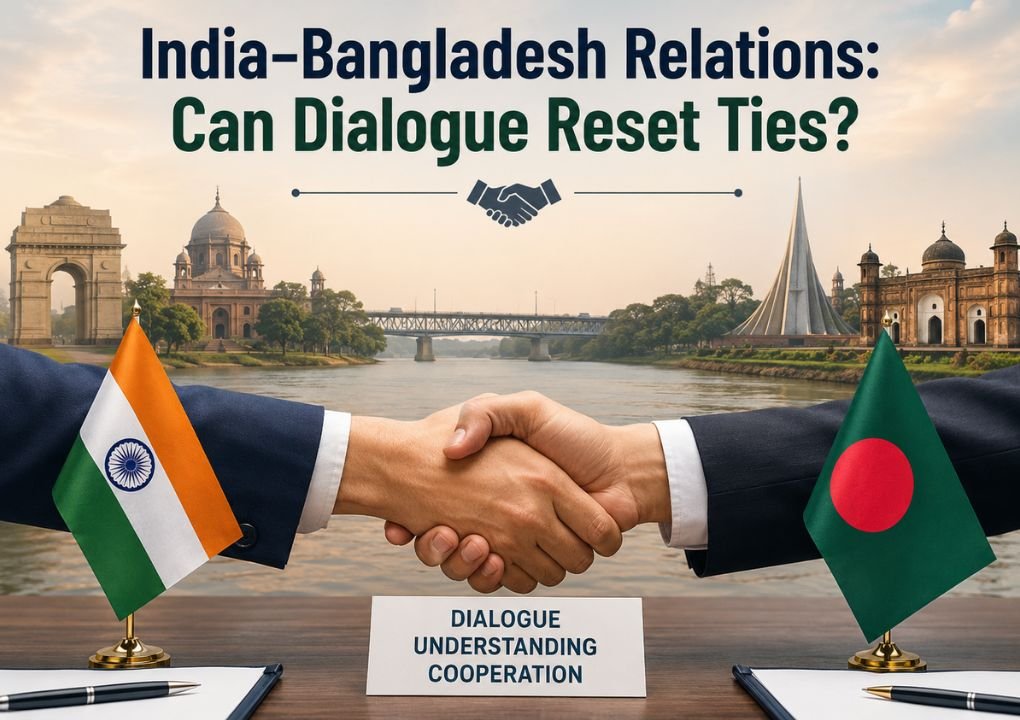
Introduction
India and Bangladesh are close neighbours. They share a long border, rivers, trade links and cultural connections. Their relationship also has a strong historical background. India supported Bangladesh during the 1971 Liberation War.
For many years, both countries worked together on trade, transport, energy, security and border management. But the relationship has also faced problems. Disagreements over water sharing, border issues, trade and political developments have created tension.
Recent political changes in Bangladesh have made the relationship more difficult. Public opinion about India has also changed in some parts of Bangladesh.
Still, India and Bangladesh need each other. They share a border and have many common economic and security interests.
This raises an important question: Can dialogue help India and Bangladesh rebuild trust and improve their relations?
A Brief History of India–Bangladesh Relations
India and Bangladesh began diplomatic relations after Bangladesh became independent in 1971. India had supported Bangladesh during its Liberation War, which became an important part of the relationship between the two countries.
However, their relations were not always friendly. Political changes and disagreements over borders, rivers and security created problems.
Relations improved during the 2010s. India and Bangladesh started working more closely on trade, transport, energy and security. They also made progress on some long-standing border problems.
The two countries are connected by geography. India and Bangladesh share a border of more than 4,000 kilometres. Bangladesh is also important for India’s access to its northeastern states.
For Bangladesh, India is an important neighbour and trading partner. Because of these connections, both countries have strong reasons to maintain stable relations.
The Current State of India–Bangladesh Relations
India–Bangladesh relations are facing new challenges.
Political changes in Bangladesh have affected its relationship with India. Some political groups and sections of the public have raised concerns about India’s role in Bangladesh.
India also has concerns about border security, illegal crossings and regional security.
These issues have affected trust between the two countries. However, this does not mean that cooperation has to stop.
Trade, transport, energy and security remain important to both sides. India and Bangladesh still need to work together on many issues.
The main challenge is to keep these areas of cooperation going while also dealing with political disagreements.
Key Issues Between India and Bangladesh
1. Border Issues
India and Bangladesh share a very long border. Managing such a large border is not easy.
Illegal crossings, smuggling and other crimes can create problems for both countries. Border incidents can also lead to anger among people on both sides.
Both countries need to improve communication between their border forces. When an incident happens, quick communication can prevent it from becoming a bigger problem.
The aim should be a safer border with fewer conflicts.
2. Water Sharing
Water is one of the biggest issues between India and Bangladesh.
The two countries share many rivers. People in both countries depend on these rivers for farming and other daily needs.
The Teesta River is a major point of disagreement. Bangladesh wants a fair and reliable share of the river’s water. India also has to consider the needs of its own states.
Finding a solution will not be easy. But regular talks can help both sides understand each other’s concerns and search for a workable agreement.
A solution to the Teesta issue could also improve trust between the two countries.
3. Trade
Trade is an important part of India–Bangladesh relations.
India and Bangladesh buy and sell many goods to each other. Better roads, railways, ports and other transport links can make this trade easier.
However, both countries have concerns about trade. Bangladesh has raised concerns about its trade gap with India, while businesses on both sides face different market and trade barriers.
Reducing these barriers could increase trade and create more opportunities for businesses.
Strong economic ties can also give both countries more reasons to maintain good relations.
4. Political Trust
Trust has become a major issue.
Political changes in Bangladesh have affected how some people view India. At the same time, India is closely watching political and security developments in Bangladesh.
Statements by political leaders can also affect public opinion.
This is why direct communication is important. Instead of allowing disagreements to grow, both governments need to discuss them openly.
Good communication cannot solve every problem, but it can reduce misunderstandings.
Why Is Dialogue Important?
India and Bangladesh will not agree on every issue. That is normal in international relations.
The important thing is how they handle their disagreements.
Dialogue gives both countries a way to discuss problems without increasing tensions. Regular meetings between government officials can help both sides understand each other’s position.
For example, India and Bangladesh can use dialogue to discuss:
- Border security
- Water sharing
- Trade
- Energy
- Transport
- Migration
- Regional security
Dialogue also helps prevent one problem from damaging the entire relationship.
However, talks must lead to action. If countries keep discussing the same issue without making progress, trust can become weaker.
Can Dialogue Reset India–Bangladesh Relations?
Dialogue can help improve India–Bangladesh relations, but it cannot fix everything immediately.
Both countries have strong reasons to cooperate.
They share a border. They depend on each other for trade and connectivity. They also face some of the same problems, including climate change, floods and regional security threats.
These shared interests can provide a starting point for better relations.
But there are also serious challenges.
Political pressure can make compromise difficult. Water-sharing disputes remain unresolved. Border incidents can create anger. Public opinion can also make negotiations harder.
For this reason, a reset will take time.
India and Bangladesh do not need to solve every problem at once. They can start with smaller steps. Progress in areas such as trade, border management and connectivity can help rebuild trust.
Once trust improves, more difficult issues can become easier to discuss.
Areas Where India and Bangladesh Can Work Together
There are several areas where both countries can increase cooperation.
Connectivity
Better roads, railways and waterways can make travel and trade easier. Improved connectivity can also help India’s northeastern states connect with Bangladesh and other parts of the region.
Energy
India and Bangladesh already cooperate in the energy sector. More cooperation in electricity and energy infrastructure can benefit both countries.
Climate Change
Both countries face floods, cyclones, river erosion and other climate-related problems.
They can share information, improve disaster preparation and work together to protect people living near rivers and coastal areas.
Security
India and Bangladesh can work together to deal with cross-border crime, smuggling and other security problems.
Better cooperation between security agencies can make the border safer.
Education and Culture
People-to-people connections can also improve relations.
Student exchanges, cultural programmes, tourism and academic cooperation can help people from both countries understand each other better.
Why In–Bang Relations Matter for South Asia
India and Bangladesh are important countries in South Asia. Their relationship affects the wider region.
Better relations can improve trade and transport across South Asia. They can also support economic growth and regional security.
Bangladesh’s location makes it important for India’s northeastern states. Better connectivity through Bangladesh can reduce travel time and improve access to markets.
A stable relationship can also make it easier for other South Asian countries to work together.
On the other hand, long-term tension between India and Bangladesh could make regional cooperation more difficult.
What Would a Reset Look Like?
A reset does not mean that India and Bangladesh will agree on everything.
It means that both countries start dealing with their problems in a more regular and practical way.
The first step should be regular talks between government officials.
The second step should be better communication during border incidents. Problems should be addressed quickly before they create wider tensions.
The third step should be progress on long-standing issues such as water sharing.
Both countries should also protect areas where cooperation is already working, such as trade, energy and transport.
Most importantly, both sides need to rebuild trust. This will take time, but small improvements can create a stronger relationship.
Conclusion
India and Bangladesh have a complicated relationship, but they also have many common interests.
Border problems, water sharing, trade and political differences have created tension. However, these problems do not have to define the entire relationship.
Dialogue can provide a way forward. Regular talks can reduce misunderstandings, solve smaller problems and create opportunities for cooperation.
But dialogue must be followed by action. Both countries need to show flexibility and work towards practical solutions.
India and Bangladesh are neighbours and will remain neighbours. Their best option is not to avoid their differences but to discuss them and find ways to work together.
A complete reset may take time, but regular dialogue can be the first step towards rebuilding trust and creating a more stable India–Bangladesh relationship.
For more information on international relations and global affairs, visit Globaltides.in.
