Saudi Arabia Calls Mecca Drone Incident a Red Line
Saudi Arabia has warned that the security of Mecca and Islam’s holy sites is a “red line” after its air defence forces intercepted and destroyed a drone south of the holy city. The incident has added another serious dimension to the growing conflict involving Saudi Arabia and Yemen’s Houthi movement, while also raising concerns about the possible expansion of regional hostilities.
According to Saudi officials, the drone was intercepted on Tuesday evening, September 15, before it entered the restricted airspace around Mecca. Saudi Arabia’s military coalition spokesperson, Major General Turki al-Malki, said the security of the Two Holy Mosques and pilgrims would not be treated lightly. The Houthis, however, have denied that they targeted Mecca or other Islamic holy sites.
The disagreement over who was responsible comes as attacks between Saudi Arabia and the Houthis have increased after a period of relative calm. The latest incident therefore needs to be understood not only as a security event near Mecca but also as part of a wider escalation across the Middle East.
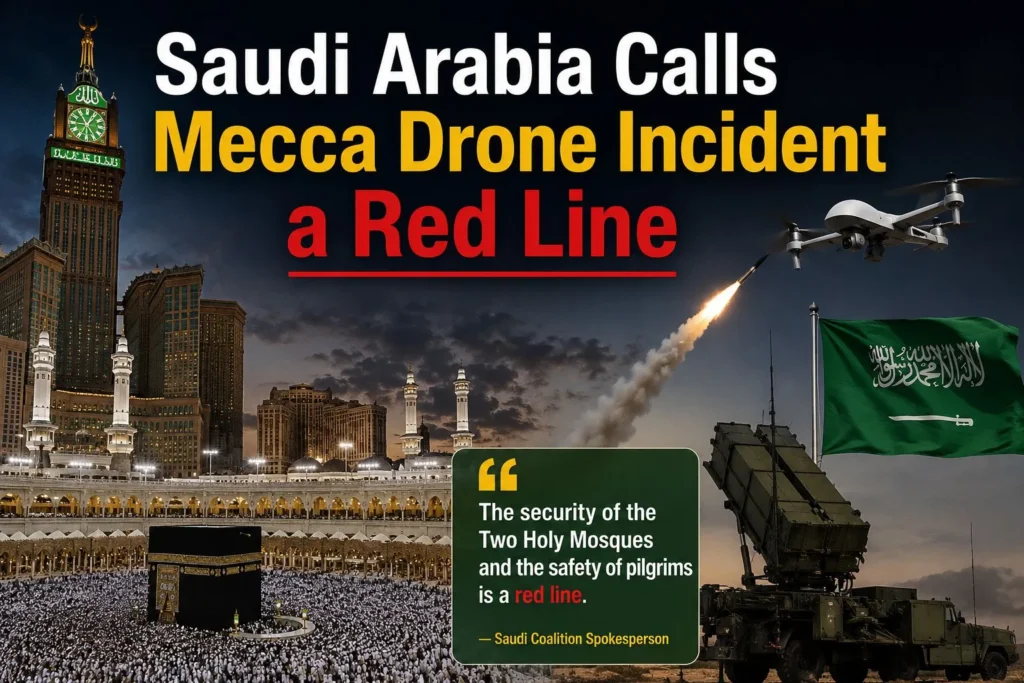
What Happened Near Mecca? (Saudi Arabia Calls Mecca Drone Incident a Red Line)
Saudi authorities said their air defence systems detected a drone flying toward the area south of Mecca and intercepted it before it entered the city’s prohibited airspace. The Saudi-led coalition described the drone as a Houthi weapon and said it was destroyed before reaching the holy city.
Saudi Arabia also issued security alerts in Mecca and other areas amid a wider series of attacks. The alert in Mecca was particularly significant because the city is home to the Grand Mosque and the Kaaba, which are central to Islamic religious life.
Saudi officials have linked the incident to what they describe as a second attempt by the Houthis to target Mecca. They referred to an earlier ballistic missile incident in July 2017, when Saudi Arabia said a missile had been launched toward the holy city.
However, the Houthis have rejected the accusation. Houthi officials have said that they did not target Mecca and have denied posing a threat to the city’s religious sites. This means that the Saudi allegation and the Houthi response should be treated separately while the wider conflict continues to develop.
Why Is Mecca So Important? (Saudi Arabia Calls Mecca Drone Incident a Red Line)
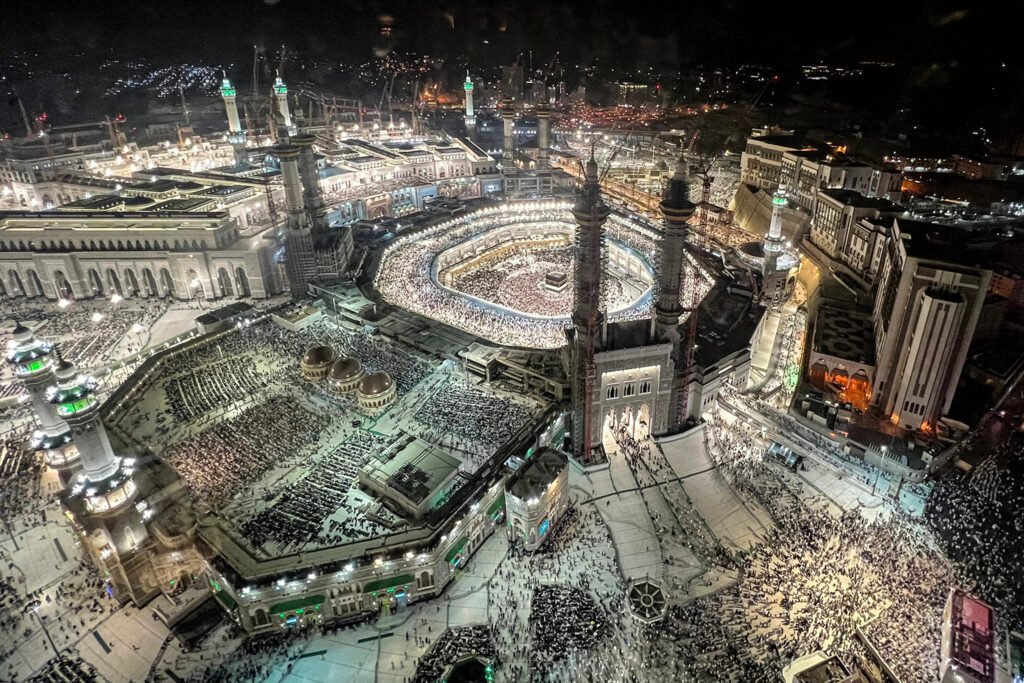
Mecca has exceptional religious importance for Muslims around the world because it is home to the Kaaba and the Grand Mosque. It is also the destination of the annual Hajj pilgrimage, one of the Five Pillars of Islam.
Because of this significance, any military incident (Saudi Arabia Calls Mecca Drone Incident a Red Line) close to the city carries consequences beyond the immediate security situation. An attack or perceived attempt to attack the area can create fear among worshippers and raise international concerns about the protection of religious sites.
Saudi Arabia has therefore placed particular emphasis on the security of Mecca, Medina and other important religious locations. The Saudi-led coalition’s spokesperson said that the security of the Two Holy Mosques and pilgrims represented a “red line.”
The statement (Saudi Arabia Calls Mecca Drone Incident a Red Line) is also important from a diplomatic perspective because it signals that Riyadh considers attacks threatening the holy sites to be fundamentally different from attacks on ordinary military or infrastructure targets.
Saudi Arabia’s Warning to the Houthis
The statement “Saudi Arabia Calls Mecca Drone Incident a Red Line” represents a strong warning from Saudi Arabia at a time when tensions with the Houthis are increasing.
Saudi coalition spokesperson Turki al-Malki said that the coalition would take necessary measures to deter further attacks. His statement came after several days of missile and drone activity involving Saudi territory.
The latest escalation follows a period in which fighting between Saudi Arabia and the Houthis had become significantly quieter. The conflict originally intensified after Saudi Arabia intervened in Yemen in 2015 as part of a coalition supporting the internationally recognized Yemeni government.
A truce in 2022 helped reduce direct Houthi attacks on Saudi territory for an extended period, although the wider Yemen conflict was never completely resolved. Recent developments have now brought the two sides into renewed confrontation.
Houthis Deny Targeting Mecca
The Houthi response on “Saudi Arabia Calls Mecca Drone Incident a Red Line” is an important part of the story because Saudi Arabia’s accusation has not been accepted by the group.
Houthi officials have denied targeting Mecca and have rejected claims that their operations were directed against Islamic holy sites. The group has also said that it does not target such locations.
This creates an important distinction between the confirmed interception of a drone and the disputed question of its intended target. Saudi Arabia says the drone was heading toward Mecca, while the Houthis deny that the city was the intended target.
For international observers, this distinction matters because responsibility and intent can influence how governments respond to an incident.
How Does This Affect the Saudi-Houthi Conflict?
The drone incident comes during a broader escalation in attacks involving Saudi Arabia and the Houthis. The Houthis have claimed responsibility for several attacks on Saudi territory, while Saudi Arabia has carried out airstrikes against targets in Yemen.
The recent fighting also has a wider geographical dimension because the Houthis control areas along parts of Yemen’s Red Sea coast near the Bab el-Mandeb Strait. This waterway is one of the world’s important maritime routes, connecting the Red Sea with the Gulf of Aden.
Any prolonged conflict around this region can create concerns for international shipping, energy transportation and regional security. The situation is particularly sensitive because disruptions in other important waterways have already affected the movement of oil and other goods.
Why the Incident Matters for Regional Security (Saudi Arabia Calls Mecca Drone Incident a Red Line)
The incident near Mecca is significant because it demonstrates how quickly a regional conflict can affect areas far from the original battlefield.
Yemen’s conflict has involved Saudi Arabia and the Houthis for more than a decade, but the recent escalation is taking place within a much wider Middle Eastern security crisis. Attacks involving drones and missiles have increased the possibility that several countries and strategic locations could become involved.
For Saudi Arabia, the protection of major cities, energy infrastructure and religious sites has become an important security concern. The interception of the drone before it entered restricted airspace shows the role of air defence systems in protecting sensitive areas, although it does not remove the broader risk created by continued attacks.
Could the Situation Escalate Further?
The immediate consequences of the incident will depend on how Saudi Arabia and the Houthis respond in the coming days.
Saudi Arabia has already warned that it will take measures to deter further attacks. At the same time, the Houthis have continued to deny targeting Mecca while claiming responsibility for other operations against Saudi targets.
If attacks continue, the conflict could place additional pressure on Saudi Arabia’s security forces and could increase risks for infrastructure, civilian areas and important transportation routes. It could also make diplomatic efforts to reduce tensions more difficult.
The situation therefore extends beyond a single drone interception. It is connected to the broader struggle over security, influence and military power across the region.
What Does This Mean for Saudi Arabia?
For Saudi Arabia, the incident presents both a security challenge and a diplomatic issue.
The country’s leadership has a direct responsibility for protecting Mecca and Medina, which attract millions of worshippers and visitors. Any perceived threat to these locations is likely to receive a particularly strong response because of their religious importance.
The incident also comes at a difficult time for Saudi Arabia because attacks on other parts of the country’s territory have created additional security and economic concerns. Recent reporting has linked the wider escalation to risks involving Saudi energy infrastructure and oil transportation routes.
This means Riyadh must manage several connected challenges at once, including protecting its territory, maintaining the security of religious sites and responding to threats without allowing the conflict to expand further.
International Reaction and Wider Concerns
The possibility of a drone heading toward Mecca has attracted international attention because the city has significance for Muslims far beyond Saudi Arabia.
The Organization of Islamic Cooperation has condemned attacks involving the holy cities, while governments and international organizations are closely watching the wider escalation. The situation also has implications for international shipping because the conflict is occurring near important maritime routes connecting the Middle East with global markets.
The international response will be important because a wider escalation could affect not only Saudi Arabia and Yemen but also neighboring countries and global trade routes.
Conclusion
Saudi Arabia’s claim that a Houthi drone was intercepted near Mecca has added a sensitive new dimension to the rapidly developing regional conflict. Saudi authorities say the drone was destroyed south of Mecca before entering restricted airspace and have described the security of the Two Holy Mosques and pilgrims as a “red line.”
The Houthis, however, have denied targeting Mecca, making the question of intent disputed. What is confirmed is that the incident occurred during a broader increase in attacks between Saudi Arabia and the Houthi movement.
The significance of the incident goes beyond the drone itself because Mecca is one of Islam’s most important religious centers, while the surrounding region is already experiencing serious military and geopolitical tensions.
As the situation develops, the key issues to watch will be whether Saudi Arabia carries out further military action, whether Houthi attacks continue, and whether regional or international diplomatic efforts can prevent the latest escalation from becoming a larger conflict.
