Introduction – India-Poland Relations Enter a New Phase
India and Poland have agreed to strengthen their strategic partnership, with defence, space technology and nuclear energy emerging as important areas of cooperation. The decision followed talks between Indian Prime Minister Narendra Modi and Polish Prime Minister Donald Tusk in New Delhi on October 22, 2026. Both leaders discussed ways to expand economic relations, encourage industrial partnerships and create new opportunities for businesses in their respective countries.
The meeting reflects a wider effort by India and Poland to turn their diplomatic relationship into practical cooperation across technology, security, trade and investment. India is seeking stronger international partnerships to support its manufacturing and technological ambitions, while Poland is looking to expand its economic engagement with one of the world’s largest markets. The two countries have also set a target of doubling bilateral trade by 2030, giving their discussions an important economic dimension.
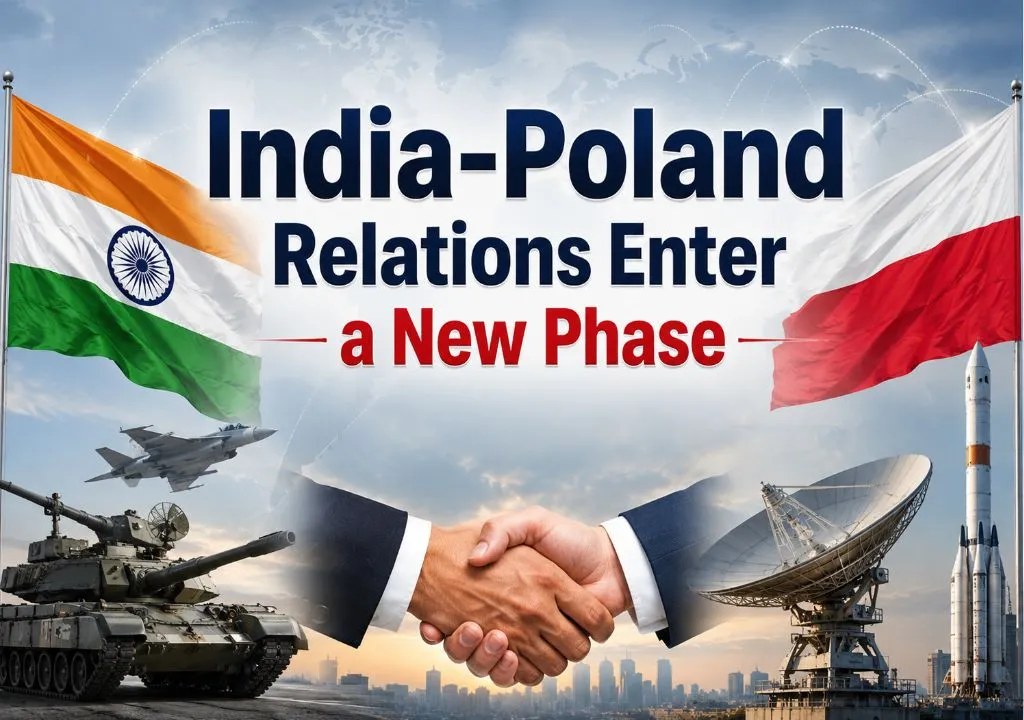
India and Poland Agree to Expand Strategic Cooperation
During their meeting (India-Poland Relations Enter a New Phase) in New Delhi, Modi and Tusk reviewed the progress of bilateral relations and discussed opportunities to work more closely in strategic sectors. The leaders agreed to deepen cooperation in defence, space and nuclear energy, while encouraging companies from both countries to explore joint projects.
Modi invited Polish companies to participate in the development and production of strategic technologies alongside Indian partners. This approach could create opportunities for businesses to share technical expertise, develop new products and establish longer-term industrial relationships.
The discussions build on the India-Poland Strategic Partnership established in August 2024, when Modi visited Poland. The partnership created a framework for expanding cooperation beyond traditional diplomatic and commercial relations. The latest talks indicate that both governments want to translate that framework into measurable outcomes through investment, technology development and regular institutional engagement.
The two leaders also discussed critical minerals, coal gasification, artificial intelligence and green technologies. These subjects are becoming increasingly important as countries seek reliable supply chains, advanced industrial capabilities and more secure sources of essential resources.
Why Defence Cooperation Matters
Defence cooperation is one of the most significant areas of the developing India-Poland relationship. India has been working to strengthen its domestic defence manufacturing sector, reduce dependence on imported equipment and encourage international companies to participate in local production. Cooperation with Poland could support these objectives if both sides identify projects that offer clear technical and commercial benefits.
Poland has experience in defence manufacturing and operates within Europe’s changing security environment. Its defence industry and technical capabilities may create opportunities for collaboration with Indian companies in selected areas, depending on the requirements of both countries.
The proposed direction of cooperation includes industrial partnerships, technology development and possible co-production arrangements. Instead of relying only on buying and selling finished equipment, businesses could explore joint manufacturing, technical exchanges and the development of specialised systems.
Such partnerships (India-Poland Relations Enter a New Phase) would require further discussions between governments and companies before specific projects could be confirmed. The recent meeting establishes a stronger political basis for exploring these possibilities, but it should not be interpreted as an announcement of a particular defence contract.
Security cooperation is also relevant to the wider relationship. Both countries have an interest in protecting critical infrastructure, strengthening technological resilience and responding to emerging security challenges. Regular dialogue between their defence establishments could help identify areas where their interests and capabilities complement each other.
For India, closer engagement with Poland could also strengthen its links with Central and Eastern Europe. For Poland, cooperation with India offers access to a large market and an opportunity to build commercial relationships in a growing Asian economy.
Space Technology Creates New Opportunities
Space is another important area in which India and Poland want to expand cooperation (India-Poland Relations Enter a New Phase). India has developed substantial capabilities in satellite technology, launch services and space applications, while Poland has an established scientific and industrial base that could support selected collaborative projects.
Cooperation in this field could involve research institutions, technology companies and organisations working on space-related applications. Potential areas for exploration include satellite systems, scientific research, data applications and the development of advanced components. These are possible avenues for future collaboration rather than confirmed projects announced during the meeting.
Space technology has applications far beyond launching satellites. It can support weather forecasting, agricultural planning, disaster management, environmental monitoring and communications. By encouraging cooperation between their scientific communities and businesses, India and Poland could explore ways to apply space-based technologies to practical economic and public needs.
The next step will be to identify projects that match the strengths and priorities of both countries. Greater engagement between research organisations, universities and private companies could help turn the broad agreement into specific initiatives.
The Polish prime minister’s planned engagement with business stakeholders in Bengaluru, including those from the information technology and space sectors, also highlights the commercial importance of technology cooperation during the visit.
Nuclear Energy and Critical Minerals on the Agenda
Nuclear energy was included alongside defence and space in the leaders’ discussions (India-Poland Relations Enter a New Phase). The sector is strategically important because countries are examining ways to diversify their energy sources, strengthen energy security and support long-term electricity demand.
For India, international cooperation can provide opportunities to explore technical expertise, industrial partnerships and scientific exchanges. Poland may also offer areas of complementary experience, although any future nuclear energy collaboration would depend on detailed discussions, regulatory requirements and the identification of suitable projects.
The leaders also discussed cooperation in critical minerals and coal gasification. Critical minerals are essential for many modern industries, including electronics, renewable energy systems, batteries and advanced manufacturing. Reliable access to these resources has become a major economic and strategic concern for governments around the world.
Working together in mineral exploration, processing and related technologies could help India and Poland identify new commercial opportunities. However, the practical benefits will depend on the projects developed, the investment involved and the ability of businesses to establish reliable supply chains.
The wider agenda shows that both countries are interested in cooperation that combines industrial growth with technology and energy security.
India and Poland Aim to Double Trade by 2030
Economic relations form another major part of the renewed partnership (India-Poland Relations Enter a New Phase). Modi and Tusk agreed to work towards doubling bilateral trade by 2030, signalling an intention to expand commercial engagement over the coming years.
The target could encourage businesses to look for opportunities in industrial machinery, engineering, pharmaceuticals, information technology, infrastructure, mining and other sectors. Companies may also benefit from stronger connections between business associations, investors and research institutions.
India offers Polish businesses access to a large consumer market, a skilled workforce and an expanding manufacturing ecosystem. Poland, meanwhile, can provide Indian companies with a base for exploring commercial opportunities in Central and Eastern Europe and the wider European market.
The India-European Union free trade agreement could further influence this relationship. Once the agreement is signed, ratified and implemented, as required, it may create additional opportunities for trade and investment between Indian and European businesses. Its actual impact will depend on the final arrangements, market conditions and how companies use the opportunities available to them.
Reaching the trade target will require more than political announcements. Businesses will need to identify competitive products, build reliable distribution networks, understand regulatory requirements and invest in long-term partnerships. Better institutional support and regular business engagement will also be important.
Historical Ties Support the Modern Partnership
Although current discussions focus on technology and economic development (India-Poland Relations Enter a New Phase), India and Poland share a relationship that extends beyond recent diplomatic initiatives.
One important historical connection dates to the Second World War, when Indian princely states, including Jamnagar and Kolhapur, provided shelter to Polish children and displaced families. Maharaja Jam Saheb Digvijaysinhji of Nawanagar is remembered in Poland as the Good Maharaja for his assistance to those escaping the conflict.
This shared history remains a symbol of humanitarian cooperation and goodwill between the two societies. It provides a foundation for people-to-people exchanges, cultural engagement and educational cooperation alongside government-level relations.
The countries have also encouraged closer academic links, student exchanges and collaboration between institutions. Such connections can help build public understanding and create professional relationships that support the partnership over time.
Global Affairs and the Future of India-Poland Relations
The talks (India-Poland Relations Enter a New Phase) also covered international developments, including the war in Ukraine and the situation in West Asia. Modi reiterated India’s support for meaningful efforts to establish peace in both regions, while the leaders emphasised the importance of international law and effective global institutions.
India and Poland may approach some international issues from different geographical and strategic perspectives, but continued dialogue can help them identify shared interests. Both countries have also recognised the importance of stronger multilateral institutions and cooperation on global challenges.
The relationship could become more significant as India expands its engagement with European countries and Poland strengthens its connections beyond the European continent. Cooperation in defence, space, energy and emerging technologies offers a practical way to develop that relationship.
However, the long-term success of the partnership will depend on implementation. Joint projects need investment, technical planning, clear regulatory arrangements and sustained participation from the private sector. Regular diplomatic engagement will be essential to maintain progress and resolve practical challenges.
Conclusion
India and Poland have taken another step towards strengthening their strategic partnership by agreeing to expand cooperation in defence, space and nuclear energy. Their discussions (India-Poland Relations Enter a New Phase) also covered critical minerals, emerging technologies, trade and investment, reflecting a relationship that is becoming broader and more economically focused.
The target of doubling bilateral trade by 2030 provides a clear objective for future engagement. If businesses and institutions translate the agreements into practical projects, the partnership could create opportunities for industrial development, technological exchange and stronger economic connections between India and Central and Eastern Europe.
For now, the key development is the shared commitment to deepen cooperation. The next stage will depend on how effectively both countries turn that commitment into concrete results.
If you find this article informative, then visit the website Globaltides.
