SCO Summit 2026: Why India, China and Russia’s Meeting Matters for the Global Order
Introduction
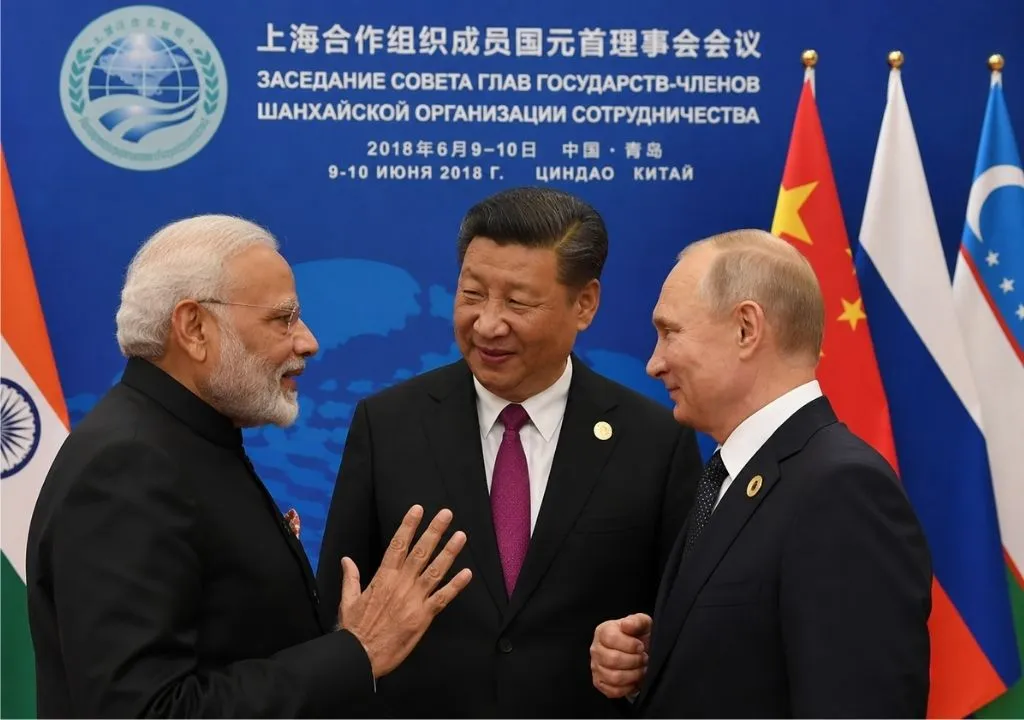
The SCO Summit 2026 is bringing some of the world’s most important political leaders together in Bishkek, Kyrgyzstan. Prime Minister Narendra Modi, Chinese President Xi Jinping and Russian President Vladimir Putin are among the leaders attending the summit of the Shanghai Cooperation Organisation (SCO). The meeting is taking place on August 31 and September 1, 2026, as the organisation marks 25 years since its creation.
The timing of the summit is important. The world is dealing with wars, rising tensions between major powers, energy concerns and growing competition over trade and technology. At the same time, countries across Asia are seeking a stronger voice in global affairs.
For India, the summit is more than a routine diplomatic meeting. It is an opportunity to engage with China, Russia, Iran and Central Asian countries while protecting India’s own strategic interests.
The meeting between India, China and Russia is especially significant. All three countries have major influence in Eurasia, but they do not always share the same interests. Their ability to cooperate despite these differences says a lot about how international politics is changing.
What Is the SCO?
The Shanghai Cooperation Organisation (SCO) was established in 2001 by China, Russia and four Central Asian countries: Kazakhstan, Kyrgyzstan, Tajikistan and Uzbekistan.
Over the years, the organisation has expanded. India and Pakistan became full members in 2017, while Iran later joined as a full member. Belarus is also now part of the organisation. The SCO has therefore grown into a major Eurasian grouping with a wide geographical reach.
The (SCO) organisation focuses on several areas, including:
- Regional security
- Counter-terrorism
- Economic cooperation
- Transport and connectivity
- Energy
- Digital cooperation
- Cultural and people-to-people exchanges
The SCO is sometimes described as a counterweight to Western influence. However, that description does not tell the whole story.
The organisation is not a military alliance like NATO. Its members have different political systems, economic priorities and foreign-policy goals.
That makes the SCO less like a traditional alliance and more like a platform where countries with different interests try to find areas of common ground.
Why Does the SCO Summit 2026 Matter?
The SCO summit 2026 comes at a particularly difficult time for international politics.
The Russia-Ukraine war continues to influence relations between Moscow and Western countries. The conflict involving Iran, Israel and the United States has added another layer of uncertainty in West Asia. Energy security, shipping routes and global trade are also being affected by geopolitical tensions.
These developments make Eurasian cooperation more important.
The SCO brings together countries that control important territory, resources, markets and transportation routes. Its members also include some of the world’s largest economies and energy producers.
The summit therefore provides an opportunity to discuss regional problems without depending entirely on Western-led institutions.
For India, the meeting also provides a chance to strengthen relations with Central Asian countries and maintain direct communication with China and Russia.
India, China and Russia at the Same Table
The meeting of Modi, Xi and Putin is one of the most closely watched aspects of the summit.
India, China and Russia have long-standing relationships, but their interests are not identical.
India and China have experienced serious disagreements, particularly over their border and wider strategic competition in Asia.
India and Russia, meanwhile, have maintained a long-standing defence and strategic relationship. Russia remains an important partner for India even as New Delhi has expanded its relations with the United States, Europe, Japan and other countries.
China and Russia have also developed close strategic ties.
This means that the three countries can cooperate on certain issues while competing or disagreeing on others.
That is one of the main reasons their meetings matter.
Modern international relations are increasingly based on flexible partnerships. Countries do not necessarily choose one side on every issue. Instead, they cooperate with different partners depending on their national interests.
India’s participation in the SCO is a clear example of this approach.
India’s Role in the SCO summit 2026
India became a full member of the SCO in 2017. Since then, New Delhi has used the organisation to engage more closely with Central Asia and other Eurasian countries.
India’s approach to the SCO summit 2026 is centred on three broad ideas: Security, Connectivity and Opportunity. Prime Minister Modi has also emphasised the need for cooperation against terrorism, separatism and extremism.
These priorities reflect India’s wider foreign-policy goals.
Security
India wants stronger cooperation against terrorism and extremist networks.
This is particularly important because instability in one part of Eurasia can quickly affect neighbouring countries. Afghanistan remains an important security concern for countries across Central and South Asia.
For India, the SCO offers a platform to raise concerns about terrorism and regional stability while working with countries that have significant influence in the region.
Connectivity
Connectivity is another major priority.
India wants better links with Central Asia, but geography makes direct land connectivity difficult.
This is why transport corridors through Iran and other parts of Eurasia are strategically important for New Delhi.
Better connectivity could help India increase trade with Central Asian markets and strengthen its economic presence in the region.
At the same time, India has consistently argued that connectivity projects should respect national sovereignty and territorial integrity.
Opportunity
India also sees the SCO as a platform for economic and technological cooperation.
Areas such as digital technology, healthcare, education, energy and trade could create new opportunities for member countries.
India’s growing economy gives it an opportunity to expand its economic engagement with Central Asia and other SCO members.
India-China Relations: Competition and Dialogue
The SCO is particularly important for India because it provides a regular platform for engagement with China.
India and China are major Asian powers. Their relationship includes trade and economic links, but it is also shaped by competition.
Border tensions have created mistrust between the two countries. Both governments therefore have an interest in maintaining communication even when disagreements remain.
A multilateral forum such as the SCO can make that dialogue easier.
It does not solve bilateral problems by itself. However, meetings between leaders can help prevent disagreements from becoming wider crises.
The presence of both Modi and Xi in Bishkek is therefore significant.
It shows that competition does not necessarily mean that diplomatic communication has to stop.
Why Russia Matters to India
Russia remains another important part of India’s SCO strategy.
India and Russia have maintained close defence and strategic ties for decades. Their relationship has also expanded into areas such as energy and trade.
At the same time, India has developed much closer relations with the United States and other Western countries.
This balancing act is an important part of India’s foreign policy.
The SCO allows India to maintain high-level engagement with Russia without making its foreign policy dependent on any single major power.
Prime Minister Modi has also used the summit to engage directly with Putin. Current reporting indicates that Modi urged Putin to move toward ending the Russia-Ukraine war, showing India’s continued preference for dialogue and diplomacy.
The Central Asian Connection
The SCO is not only about India, China and Russia.
Central Asian countries are at the heart of the organisation.
Kazakhstan, Kyrgyzstan, Tajikistan and Uzbekistan occupy a strategically important position between Europe, Russia, China, South Asia and the Middle East.
Their location gives them importance in trade, energy and transportation.
India has been trying to deepen its relationship with Central Asia through trade, education, healthcare, energy and connectivity.
Prime Minister Modi’s 2026 visit to Uzbekistan before travelling to Kyrgyzstan also reflects India’s broader effort to strengthen its Central Asian engagement.
For India, stronger ties with the region can reduce its dependence on a limited number of routes and partners.
Energy Security Is Becoming More Important
Energy is another major issue at the summit.
The current instability in West Asia has highlighted how vulnerable global energy markets can be to political and military crises.
India is one of the world’s major energy-consuming economies and depends significantly on imported energy.
This makes stable supply routes extremely important.
Iran’s participation in the SCO also adds importance to discussions about energy and transportation.
India and Iran have their own economic and strategic interests, particularly around connectivity and access to Central Asia.
At the Bishkek summit, Modi and Iranian President Masoud Pezeshkian also held discussions, with trade, energy and regional developments among the areas of interest.
The SCO and the Changing Global Order
The growing importance of the SCO is connected to a larger change in international politics.
For decades, the United States and its Western allies played a dominant role in many global institutions and security arrangements.
Today, countries such as China, India and Russia have greater economic and political influence.
Many countries are also calling for international institutions to better reflect the realities of the modern world.
This is where the idea of a multipolar world becomes important.
A multipolar world is one in which power is spread among several major countries instead of being concentrated around one dominant power.
The SCO is not creating this system on its own. But it is one of the organisations through which major non-Western powers are increasing their cooperation.
Is the SCO an Anti-Western Alliance?
It would be too simple to describe the SCO as an anti-Western alliance.
The organisation includes countries with very different foreign policies.
India, for example, has strong partnerships with the United States, Japan, Australia and European countries while also working closely with Russia, Iran and Central Asian states.
India’s participation in the SCO does not mean that it has abandoned its relationships with Western countries.
Instead, it reflects India’s preference for maintaining several strategic partnerships at the same time.
China and Russia may have their own ideas about changing the global order, but India approaches the SCO from the perspective of its own national interests.
This difference is important when analysing the organisation.
The SCO’s Biggest Challenges
Despite its growing influence, the SCO faces several problems.
India-China tensions
India and China remain strategic competitors. Their disagreements could limit deeper cooperation within the organisation.
India-Pakistan tensions
India and Pakistan are both SCO members, but their bilateral relationship remains difficult. This can make political cooperation more complicated.
Different economic interests
Member countries have different economies and priorities. Turning broad political statements into practical economic projects can therefore take time.
Lack of a common foreign policy
Unlike a formal alliance, SCO members do not have one unified foreign-policy position.
They often disagree on international conflicts and security issues.
Balancing major powers
China and Russia have significant influence within the organisation. Other members, including India and the Central Asian states, have their own interests and do not necessarily want the SCO to become dominated by any one country.
These challenges mean that the organisation’s future success will depend on its ability to find practical areas of cooperation.
What Does the SCO Summit 2026 Mean for India?
For India, the SCO Summit 2026 is an opportunity to pursue several goals at the same time.
First, India can strengthen its relationships with Central Asian countries.
Second, it can raise concerns about terrorism and regional security.
Third, it can discuss connectivity and trade.
Fourth, it can maintain dialogue with China.
Finally, it can continue its strategic relationship with Russia while also maintaining partnerships with Western countries.
This is a reflection of India’s broader diplomatic strategy.
Rather than joining a single geopolitical camp, India is trying to work with different powers on different issues.
What Could Come Out of the SCO Summit 2026?
The SCO summit 2026 may not produce one dramatic agreement that changes global politics overnight.
Its importance could instead come from a series of smaller developments.
These could include:
- Greater cooperation on counter-terrorism.
- New discussions on regional connectivity.
- Stronger economic engagement.
- Cooperation in energy and technology.
- Greater interaction between India and Central Asian countries.
- Continued India-China diplomatic engagement.
- Discussions about the conflicts affecting Eurasia and West Asia.
- New ideas for strengthening the SCO itself.
The summit is also expected to produce a major declaration outlining the members’ shared positions and priorities.
The real test, however, will be whether countries can turn those statements into practical cooperation.
Why the SCO Matters Beyond Asia
The SCO’s importance is not limited to its member countries.
Decisions made by major Eurasian powers can affect global energy markets, trade routes, security and diplomacy.
The organisation also reflects a wider trend.
Countries outside the traditional Western alliance system are increasingly creating and strengthening their own platforms for cooperation.
This does not mean that Western institutions are becoming irrelevant.
Instead, the global system is becoming more complicated.
Countries now participate in several organisations and partnerships at the same time.
India is a good example.
It works with the United States and its partners in the Indo-Pacific, participates in BRICS and the SCO, engages with Russia and maintains relationships with European and Middle Eastern countries.
This flexible diplomacy is likely to remain important as global power becomes more widely distributed.
Conclusion
The SCO Summit 2026 is taking place at a time when the international system is changing rapidly.
The presence of Narendra Modi, Xi Jinping and Vladimir Putin in Bishkek makes the summit particularly important. Their countries have areas of cooperation, but they also have significant differences.
The key point is that they are still willing to sit at the same table.
For India, the summit is an opportunity to strengthen its position in Eurasia while protecting its strategic independence. Security, connectivity and economic opportunity remain central to India’s approach to the organisation.
The summit also highlights the growing importance of Central Asia, energy security and regional connectivity.
The SCO is unlikely to become a single united political bloc. Its members have too many different interests for that.
But that may not be its purpose.
Its real value may lie in providing a place where countries with competing interests can continue talking, negotiate practical cooperation and manage disagreements.
As the global system becomes more multipolar, organisations such as the SCO are likely to receive greater attention.
For India, the message is clear: its future influence will depend not only on the partnerships it builds, but also on its ability to engage with countries across different sides of the geopolitical divide.
The SCO Summit 2026 is therefore more than another international meeting. It is a snapshot of a world where power is becoming more distributed, diplomacy is becoming more flexible and countries are increasingly choosing cooperation without giving up their independence.
